


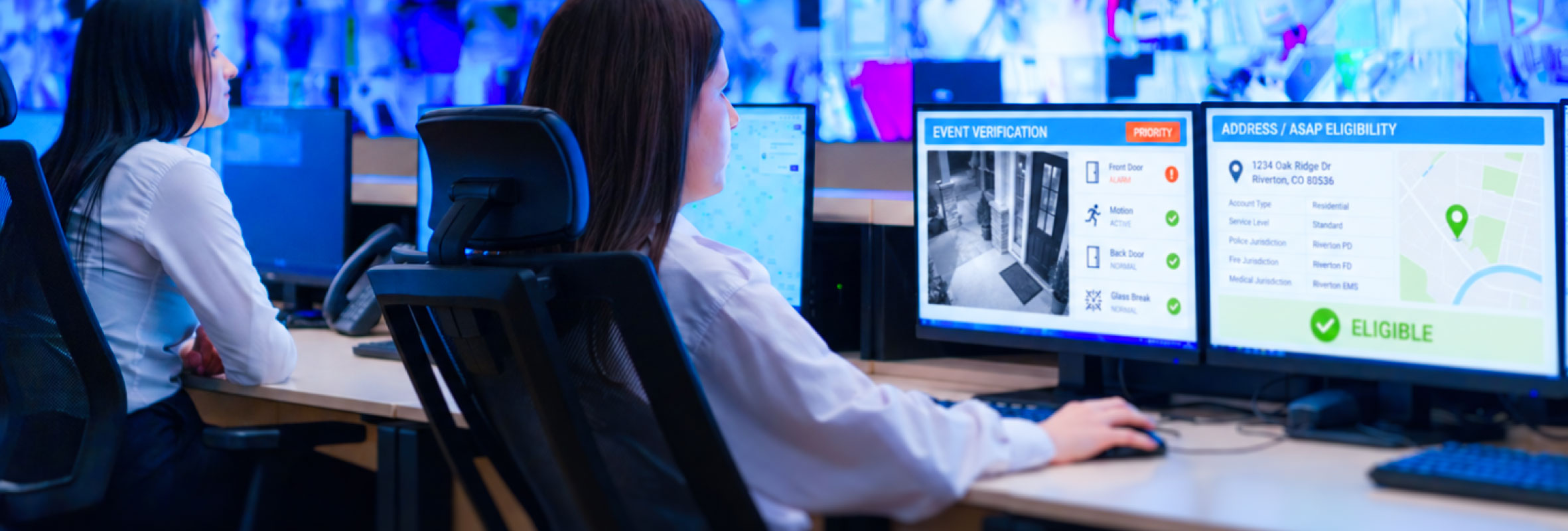
An alarm signal tells us something happened. Increasingly, technology can help us understand what happened before requesting a public safety response.
That distinction may be one of the most important changes shaping the future of alarm monitoring.
Video verification, audio, multiple sensor activations, and AI-assisted analytics are giving monitoring centers more information to evaluate an event before dispatch. Instead of simply processing a signal, operators can increasingly add context that helps determine whether an event appears to require public safety intervention.
Fewer Alarms, Better Information
For monitoring centers, verification creates an opportunity to stop thinking solely about how many signals are processed and start thinking about the quality of the events ultimately sent for dispatch.
If technology helps identify events that don't require a public safety response, fewer unnecessary alarms may reach emergency communications centers. At the same time, when a verified event is transmitted, the information accompanying it may provide greater confidence and context.
That's important for public safety agencies managing their own staffing and workload challenges. The goal isn't simply fewer alarms. It's making the alarms that do require response more actionable.
Where ASAP Fits
ASAP provides the digital connection that helps move alarm information from the monitoring center to participating public safety agencies without the traditional telephone call and manual data entry.
Verification strengthens what happens before that transmission. ASAP improves how the resulting event is delivered.
Together, they create an opportunity to improve the entire alarm response process: technology helps determine which events warrant action, monitoring professionals add expertise and context, and automation helps deliver the information accurately and efficiently to public safety.
A Different Measure of Success
As verification becomes more sophisticated, monitoring centers may want to consider new measures of operational success.
Rather than focusing only on how quickly an operator processes an alarm, what if we also measured how many unnecessary dispatch requests were prevented? How many events included verified information? Or how frequently additional context helped public safety better understand the event?
The monitoring center of the future won't simply be measured by the number of signals it processes. Its value will increasingly come from its ability to turn those signals into credible, actionable information.
Future Focus
How is video verification changing your monitoring center today?
Is it reducing unnecessary dispatch requests, changing operator workflows, improving the information you provide to public safety—or creating entirely new services for your customers?
We'd love to hear what you're seeing.